Page 6 of 7

Do You Know the Way?

Do You Know the Way?

It may be natural for first-time buyers to be unsure of the process of buying a home because they haven’t been through it before but even repeat buyers need to know changes that have taken place since the financial housing crisis.

The steps in the home buying process are predictable and generally follow the same pattern.  It certainly makes the move stay on schedule when you know all the different things that must be done to get to the closing.

  • In the initial interview with your real estate professional, you share the things you want and need in a home, discuss available financing and learn how your agent can represent you in the transaction.
  • The pre-approval step is essential for anyone using a mortgage to purchase a home to assure that they’re looking at the right price of homes and so they’ll know what they can qualify for and what the interest will be.
  • Even with lower than normal inventory, it is difficult to stay up-to-date with the homes currently for sale and the new one just coming on the market.  Technology has simplified this process, but the buyer needs to implement them.  Typically, your Realtor will start a search based on the criteria you indicated was important.  Likewise, buyers typically establish online searches.  We recommend you share any listings you find interesting with your Realtor so your Realtor can fine tune their search based on your changing desires.
  • Your real estate professional can work with you to see all the homes on the market regardless of whether they are listed by real estate brokers, offered by builders or for sale by owners.
  • When a home has been identified, an offer is written and the negotiations over price, condition and terms takes place.
  • A contract drafted by your Realtor is a fully negotiated, written agreement.
  • Escrow is opened to deposit the earnest money from the buyer as a sign they are acting in good faith.  Earnest money may also represent liquidating damages paid to the seller in the event the buyer is in default of a term of the contract.  A title search is also started so that clear title can be conveyed from the seller to the buyer and that the lender will have a valid lien on the property.
  • 88% of home sales involve a mortgage.  The lender will require an appraisal to be sure that the home can serve as partial collateral for the loan.  If the buyer has been pre-approved, the verifications will be updated to be certain that they’re still valid and that they buyer still qualifies for the loan.  The entire loan package when completed, is sent to underwriting for final approval.
  • When the contract is completed, at the same time the title search and mortgage approval is being worked on, the buyer and buyer’s Realtor will arrange for any inspections that were called for in the contract.
  • After all contingencies have been completed, the transaction goes to settlement where all of the necessary papers (loan documents) are signed, and the balance of the buyer’s money is paid.
  • Title transfers from the seller to the buyer on the date of closing that is specified in the sales contract.
  • Possession occurs according to the terms of the sales contract and may or may not be on the same day as closing.

One of the responsibilities of your real estate professional is to make sure that things are done in a timely manner so that the transaction will close according to the agreement on time and without unforeseen or unnecessary problems.

Even if you’re not ready to buy or start looking yet, you need to be assembling your team of professionals.  Let us know and we’ll send you our recommendations, so you can read about them on their websites.

If you have any questions, call us at (206) 979-9632; we’re happy to help.  Informed buyers lead to satisfied homeowners and that is better for everyone involved.
Roll the Repairs into the Mortgage

It’s been said that if you can find a home that has most of what you want, you should go ahead and purchase it.  Many first-time buyers are using everything they have for a down payment and closing costs and would have to “live” with the less than perfect home until they can save the money to make the changes.

The FHA 203(k) mortgage allows a borrower to purchase a home and provides additional funds for improvements to be made.  These types of renovations can include kitchen and bathroom remodels, flooring, plumbing, heating and air conditioning systems, additions and other things.

The benefit to the buyer is that they have the opportunity to consider a home that needs repairs and might have been unacceptable without a program like this.  Being a FHA loan, a minimal down payment is required, fair interest rates and generous qualifying requirements.

The 203(k) Streamline can be used for cosmetic improvements, appliances and minor remodeling up to $35,000 in cost.

As you can imagine, this is a specialized program and not all lenders choose to make 203(k) loans.  They usually take longer to process and getting firm bids on the work to be done will be required.  It is important to find out how much experience a lender has with this particular type of loan.

It will also be required that you work with a 203(k) consultant in addition to the mortgage officer.

For more information, go to Hud.gov.  FNMA has a similar conventional loan program called HomeStyle Mortgage.  Your real estate professional will be able to help with recommendations.  Call me at (206) 979-9632.

Getting the “Right” Home

Getting the “Right” Home

Finding the right home is still the biggest challenge buyers are faced with in today’s market as is shown in the latest Confidence Index Survey.  Assuming the buyers find the “right” home with determination, perseverance and the help of a real estate professional, 88% of all transactions last year required financing to get the buyer’s address on the home.  93% of first-time buyers needed financing.

Pre-approval is an essential step that needs to be handled before buyers begin searching for a home.  The benefits to the buyer fall into the category of confidence.

PRE-APPROVAL GIVES YOU CONFIDENCE

  • Knowing the amount you can borrow
    the mortgage amount decreases as interest rates rise
  • Looking at the right priced homes
    price, size, amenities, location
  • Comparing and identifying the best loan
    rate, term, type
  • Uncover issues early that could affect the most favorable loan terms
    time to cure possible problems
  • Bargaining power to negotiate with the seller and possibly, competing buyers
    price, terms, & timing
  • Settlement can occur sooner after contact is accepted
    verifications have already been made

Items Needed for Pre-Approval

  • Photo ID
  • Two months current pay stubs
  • Last two year’s W2s
  • Complete copies of checking and savings statements for last three months
  • Copies of statements for IRAs, 401k, savings, CDs, money market funds, etc.
  • Employment history for last two years with addresses and contacts
  • Proof of commissioned or bonus income
  • Residency history for last two years with addresses and contacts
  • Assets for down payment, closing costs, and reserves; must provide paper trail
  • If self-employed, last two years tax returns, current profit and loss statement and balance sheet; copy of partnership/corporate tax returns for last two years if owning more than 25% of company
  • FHA requires driver’s license and social security card
  • VA requires original certificate of eligibility and DD214
  • Other things may be required such as previous bankruptcy, divorce decree

Contact us at (206) 979-9632 or David@TheHarlanTeam.com if you’d like a recommendation of a trusted mortgage professional.

Maybe It Is Time To Get Rid Of That HELOC

In September, the Federal Reserve raised interest rates for the third time in 2018 and they’re expected to go up one more time this year and three times next year.  If you have a Home Equity Line of Credit, HELOC, you’re paying more to use that money and it is going to become more expensive.

It may make sense to refinance your home and consolidate the balance of your HELOC to lock in a lower mortgage rate.  Most lenders require that the combination of these loans should not exceed 80% of the home’s fair market value and that you have good credit and adequate income to support the payment.

A HELOC is a first or second mortgage that allows the borrower to withdraw money as needed, up to the line of credit provided by the lender.  A draw period is established where the borrower is only required to pay interest.

Since all HELOC loans are variable rate mortgages, during periods of rising rates, the cost of the funds increase.  However, unlike adjustable rate mortgages that have specified adjustment periods and caps, a HELOC adjusts when the prime interest changes.

The formula for determining available funds on a refinance are to take 80% of the fair market value, which will probably have to be verified by appraisal, less the existing first mortgage and the costs to refinance.  The balance would need to cover the cost of replacing the HELOC.  Any remaining balance may be available for cash to be taken out.

Now is a great time for a mortgage review. In many cases, the equity you have in your home may allow you to eliminate mortgage insurance and substantially lower your monthly payment. As with all tax matters, always consult with a tax professional before making any decisions.  Call us at (206) 979-9632 for a recommendation of a trusted mortgage professional.

Consumer Protection from Irresponsible Mortgage Practices

Consumer Protection from Irresponsible Mortgage Practices

Congress enacted the Dodd-Frank Act in 2010 in response to the mortgage crisis that led to America’s Great Recession.  The two parts that apply closely to homebuyers are the Ability-to-Repay (ATR) and Qualified Mortgages (QM).

A Qualified Mortgage is a category of loans that have certain, more stable features that help make it more likely that borrowers will be able to afford their loan.  These loans do not allow certain risky features like an interest-only period when no money is applied to reduce the principal; negative amortization that would allow the mortgage balance to increase; and, “balloon payments” at the end of the loan that are larger than the normal periodic payments.

A debt-to-income ratio of less than or equal to 43% has been established to provide a limit on how much of a borrower’s income can go toward total debt including the mortgage and all other monthly debt payments.  However, the Consumer Finance Protection Bureau believes these loans should be evaluated on a case-by-case basis and in some cases, can exceed 43%.

There is a limit for up-front points and fees the lender can charge.

By showing that the lender made an effort to be certain that the borrower has the ability to repay the loan, the lender in turn, receives certain legal protections.  Underwriting factors considered by the lender include:

  1. current or reasonably expected income or assets
  2. current employment status
  3. the monthly payment on the covered transaction
  4. the monthly payment on any simultaneous loan
  5. the monthly payment for mortgage-related obligations
  6. current debt obligations, alimony, and child support
  7. the monthly debt-to-income ratio or residual income
  8. credit history

For more information, see the Consumer Financial Protection Bureau fact sheet … protecting consumers from irresponsible mortgage lending.

Act Decisively

Act Decisively

Whether it is hesitation or procrastination due to uncertainty, it can cost buyers by having to pay more for both the house and the financing.  This is one of those markets where most of the experts expect interest rates and prices will continue to rise through 2019.

The National Association of REALTORS? reports there is currently a 4.2-month supply of homes for sale which is close to the same as last year’s inventory.  Normal inventory is considered to be a 6-month supply.  In King County there is approximately a 1.7-month supply of homes.

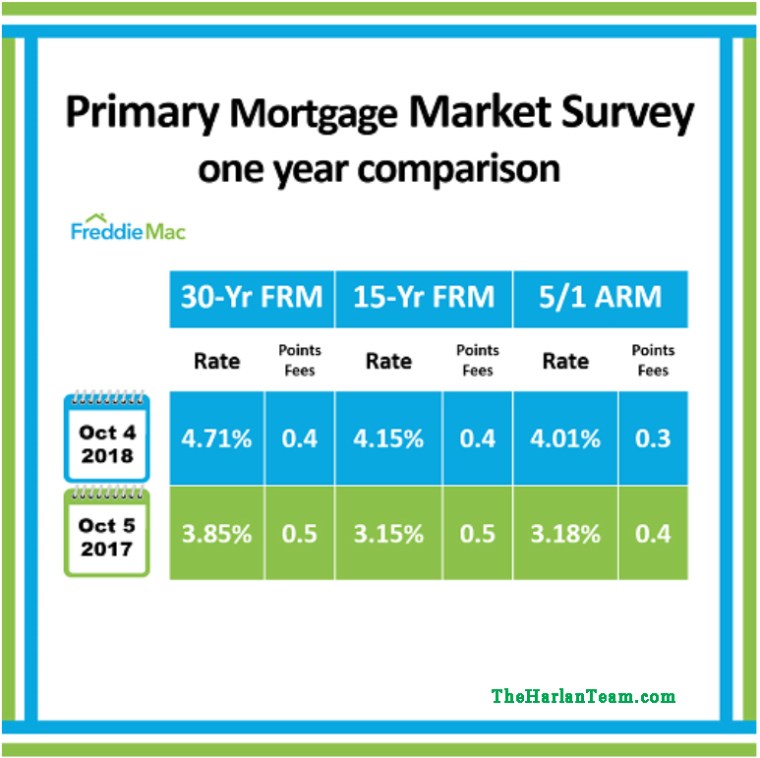
If during the period you’re waiting to buy, the price of the home goes up by 5% and the mortgage rate (4.8%) increases by 1%, the payment on a $500,000 home with a 95% mortgage could be $434.27 more each and every month.  Over a seven-year period, the delay to purchase would total close to $36,500.

To act decisively, you need good information; a confused mind will not generally make a decision.  In today’s market, you need to know exactly what price home you can qualify for and you need to know what kind of home you can expect for that price.

You’ll want a housing and a mortgage professional you can trust to give you the information you need to make good decisions for yourself and your family.  We’d like to be your real estate professional and can recommend a trusted mortgage professional.

To get a better idea about what it may cost you for a home in your price range, use the Cost of Waiting to Buy calculator.  If you have any questions, call me at (206) 979-9632.